The Best Fluffy Pancakes recipe you will fall in love with. Full of tips and tricks to help you make the best pancakes.

Warm the milk and cream slightly before whisking them into the roux. Cold dairy added all at once is more likely to leave lumps in the sauce.
Cover the dish with foil for the first half of baking. This traps steam so the potatoes cook through before the top has a chance to brown too fast.
Let the dish rest for at least 10 minutes after it comes out of the oven. The sauce is still quite thin straight from the oven and thickens noticeably as it cools and sets.
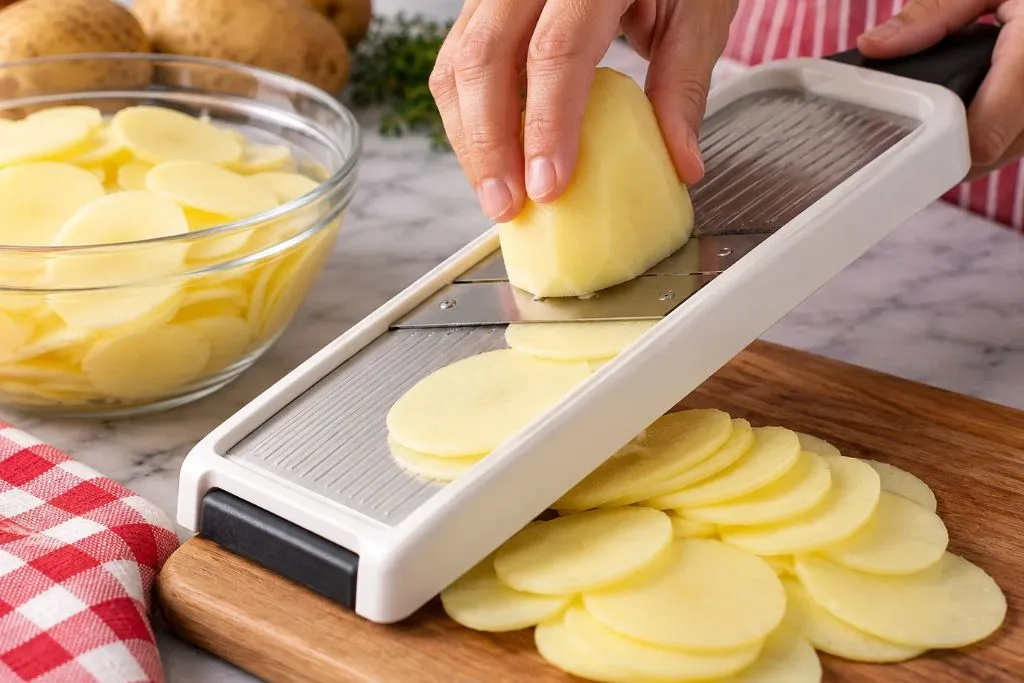
If you do not have a mandoline, a sharp chef’s knife or the slicing disc on a food processor both work, the goal is just even, thin slices.
What to serve with scalloped potatoes
Scalloped potatoes are rich enough to hold their own next to a simple roasted or braised main. My Roast Turkey Breast is one of my favorite pairings around the holidays, and it bakes in a similar oven window so both can come out close together. For a stovetop alternative on a busier weeknight, my Garlic Mashed Potatoes recipe delivers a similar buttery comfort without needing the oven at all.
Make-ahead, storage and reheating
To get ahead, assemble the dish completely, cover and refrigerate for up to a day before baking, then add about 10 to 15 extra minutes to the covered baking time since it will start out cold. Leftovers keep in an airtight container in the fridge for up to 3 to 4 days, in line with general USDA guidance on how long cooked potato dishes stay safe to eat. Reheat individual portions in the microwave, or cover the baking dish with foil and warm it in a 350F oven for about 20 minutes.
Nutrition estimate
These numbers are an estimate only, based on the ingredients as written, not a calculated or verified nutrition label. One serving, about one eighth of the dish, comes out to roughly 280 to 320 calories, most of it from the butter, cream and cheese, with around 7 grams of protein per serving. Leave out the cheese or use all milk instead of part cream to lighten it up.
Frequently asked questions
What is the difference between scalloped potatoes and potatoes au gratin?
Traditionally, scalloped potatoes are made with a roux thickened cream sauce and no cheese, while potatoes au gratin add cheese between the layers and often skip the roux altogether. In practice, a lot of recipes labeled scalloped potatoes today, including this one, add a little cheese anyway, so the line between the two has blurred over the years, especially in American home cooking.
What is the best potato for scalloped potatoes?
Yukon Gold potatoes are the best all-around choice, they hold their shape while still turning creamy and tender. Russet potatoes work well too and add a bit more starch to help thicken the sauce. Waxy potatoes like red or new potatoes hold up structurally but stay firmer, so they are better suited to a different, more rustic style of dish.
Why is my scalloped potato sauce thin or watery?
A thin sauce usually means the roux did not cook long enough before the milk was added, or the potatoes released extra moisture as they baked. Cook the butter and flour together for a full minute before whisking in the milk, and let the finished dish rest for 10 to 15 minutes after baking, the sauce thickens noticeably as it cools.
Can I make scalloped potatoes ahead of time?
Yes. Assemble the whole dish up to a day ahead, cover and refrigerate, then bake it straight from the fridge, adding 10 to 15 extra minutes to the covered baking time. This makes it a convenient make-ahead side for Thanksgiving or other big meals when oven space is tight.
Tips for perfectly creamy scalloped potatoes
Warm the milk and cream slightly before whisking them into the roux. Cold dairy added all at once is more likely to leave lumps in the sauce.
Cover the dish with foil for the first half of baking. This traps steam so the potatoes cook through before the top has a chance to brown too fast.
Let the dish rest for at least 10 minutes after it comes out of the oven. The sauce is still quite thin straight from the oven and thickens noticeably as it cools and sets.
If you do not have a mandoline, a sharp chef’s knife or the slicing disc on a food processor both work, the goal is just even, thin slices.
What to serve with scalloped potatoes
Scalloped potatoes are rich enough to hold their own next to a simple roasted or braised main. My Roast Turkey Breast is one of my favorite pairings around the holidays, and it bakes in a similar oven window so both can come out close together. For a stovetop alternative on a busier weeknight, my Garlic Mashed Potatoes recipe delivers a similar buttery comfort without needing the oven at all.
Make-ahead, storage and reheating
To get ahead, assemble the dish completely, cover and refrigerate for up to a day before baking, then add about 10 to 15 extra minutes to the covered baking time since it will start out cold. Leftovers keep in an airtight container in the fridge for up to 3 to 4 days, in line with general USDA guidance on how long cooked potato dishes stay safe to eat. Reheat individual portions in the microwave, or cover the baking dish with foil and warm it in a 350F oven for about 20 minutes.
Nutrition estimate
These numbers are an estimate only, based on the ingredients as written, not a calculated or verified nutrition label. One serving, about one eighth of the dish, comes out to roughly 280 to 320 calories, most of it from the butter, cream and cheese, with around 7 grams of protein per serving. Leave out the cheese or use all milk instead of part cream to lighten it up.
Frequently asked questions
What is the difference between scalloped potatoes and potatoes au gratin?
Traditionally, scalloped potatoes are made with a roux thickened cream sauce and no cheese, while potatoes au gratin add cheese between the layers and often skip the roux altogether. In practice, a lot of recipes labeled scalloped potatoes today, including this one, add a little cheese anyway, so the line between the two has blurred over the years, especially in American home cooking.
What is the best potato for scalloped potatoes?
Yukon Gold potatoes are the best all-around choice, they hold their shape while still turning creamy and tender. Russet potatoes work well too and add a bit more starch to help thicken the sauce. Waxy potatoes like red or new potatoes hold up structurally but stay firmer, so they are better suited to a different, more rustic style of dish.
Why is my scalloped potato sauce thin or watery?
A thin sauce usually means the roux did not cook long enough before the milk was added, or the potatoes released extra moisture as they baked. Cook the butter and flour together for a full minute before whisking in the milk, and let the finished dish rest for 10 to 15 minutes after baking, the sauce thickens noticeably as it cools.
Can I make scalloped potatoes ahead of time?
Yes. Assemble the whole dish up to a day ahead, cover and refrigerate, then bake it straight from the fridge, adding 10 to 15 extra minutes to the covered baking time. This makes it a convenient make-ahead side for Thanksgiving or other big meals when oven space is tight.
Homemade scalloped potatoes recipe
Tips for perfectly creamy scalloped potatoes
Warm the milk and cream slightly before whisking them into the roux. Cold dairy added all at once is more likely to leave lumps in the sauce.
Cover the dish with foil for the first half of baking. This traps steam so the potatoes cook through before the top has a chance to brown too fast.
Let the dish rest for at least 10 minutes after it comes out of the oven. The sauce is still quite thin straight from the oven and thickens noticeably as it cools and sets.
If you do not have a mandoline, a sharp chef’s knife or the slicing disc on a food processor both work, the goal is just even, thin slices.
What to serve with scalloped potatoes
Scalloped potatoes are rich enough to hold their own next to a simple roasted or braised main. My Roast Turkey Breast is one of my favorite pairings around the holidays, and it bakes in a similar oven window so both can come out close together. For a stovetop alternative on a busier weeknight, my Garlic Mashed Potatoes recipe delivers a similar buttery comfort without needing the oven at all.
Make-ahead, storage and reheating
To get ahead, assemble the dish completely, cover and refrigerate for up to a day before baking, then add about 10 to 15 extra minutes to the covered baking time since it will start out cold. Leftovers keep in an airtight container in the fridge for up to 3 to 4 days, in line with general USDA guidance on how long cooked potato dishes stay safe to eat. Reheat individual portions in the microwave, or cover the baking dish with foil and warm it in a 350F oven for about 20 minutes.
Nutrition estimate
These numbers are an estimate only, based on the ingredients as written, not a calculated or verified nutrition label. One serving, about one eighth of the dish, comes out to roughly 280 to 320 calories, most of it from the butter, cream and cheese, with around 7 grams of protein per serving. Leave out the cheese or use all milk instead of part cream to lighten it up.
Frequently asked questions
What is the difference between scalloped potatoes and potatoes au gratin?
Traditionally, scalloped potatoes are made with a roux thickened cream sauce and no cheese, while potatoes au gratin add cheese between the layers and often skip the roux altogether. In practice, a lot of recipes labeled scalloped potatoes today, including this one, add a little cheese anyway, so the line between the two has blurred over the years, especially in American home cooking.
What is the best potato for scalloped potatoes?
Yukon Gold potatoes are the best all-around choice, they hold their shape while still turning creamy and tender. Russet potatoes work well too and add a bit more starch to help thicken the sauce. Waxy potatoes like red or new potatoes hold up structurally but stay firmer, so they are better suited to a different, more rustic style of dish.
Why is my scalloped potato sauce thin or watery?
A thin sauce usually means the roux did not cook long enough before the milk was added, or the potatoes released extra moisture as they baked. Cook the butter and flour together for a full minute before whisking in the milk, and let the finished dish rest for 10 to 15 minutes after baking, the sauce thickens noticeably as it cools.
Can I make scalloped potatoes ahead of time?
Yes. Assemble the whole dish up to a day ahead, cover and refrigerate, then bake it straight from the fridge, adding 10 to 15 extra minutes to the covered baking time. This makes it a convenient make-ahead side for Thanksgiving or other big meals when oven space is tight.
Ingredient notes and substitutions
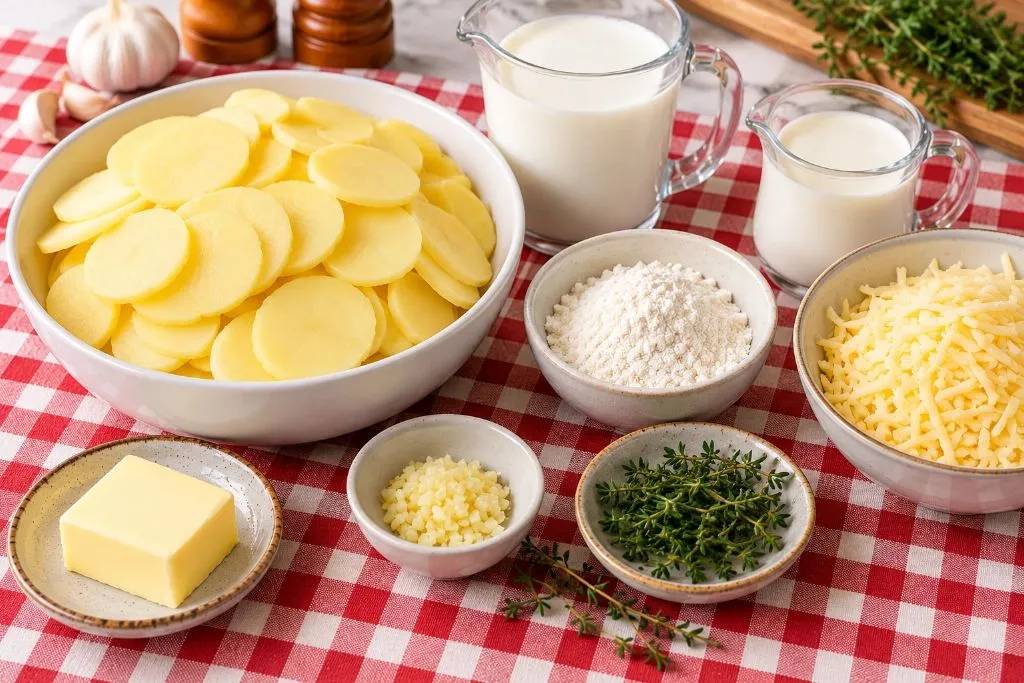
Potatoes: Yukon Gold potatoes hold their shape well and add a naturally buttery flavor to the finished dish. Russet potatoes work too and turn out a bit starchier, which helps thicken the sauce slightly as it bakes.
Milk and cream: whole milk keeps the sauce pourable while a small amount of heavy cream adds richness. Using all milk works fine too, the sauce will just be a touch thinner.
Butter and flour: cooked together into a roux, they thicken the sauce enough to coat the potatoes instead of leaving them sitting in a thin liquid at the bottom of the dish.
Garlic and thyme: cooked briefly in the butter before the flour goes in, so their flavor spreads through the whole sauce instead of staying concentrated in a few bites.
Cheese (optional): traditional scalloped potatoes are made without cheese, that is actually the main thing that separates them from potatoes au gratin (more on that in the FAQ below). This recipe includes a light layer of shredded Gruyere or sharp cheddar because most American versions, including the one I grew up eating, add a little. Leave it out entirely for a more classic, dairy forward version.
How to make homemade scalloped potatoes
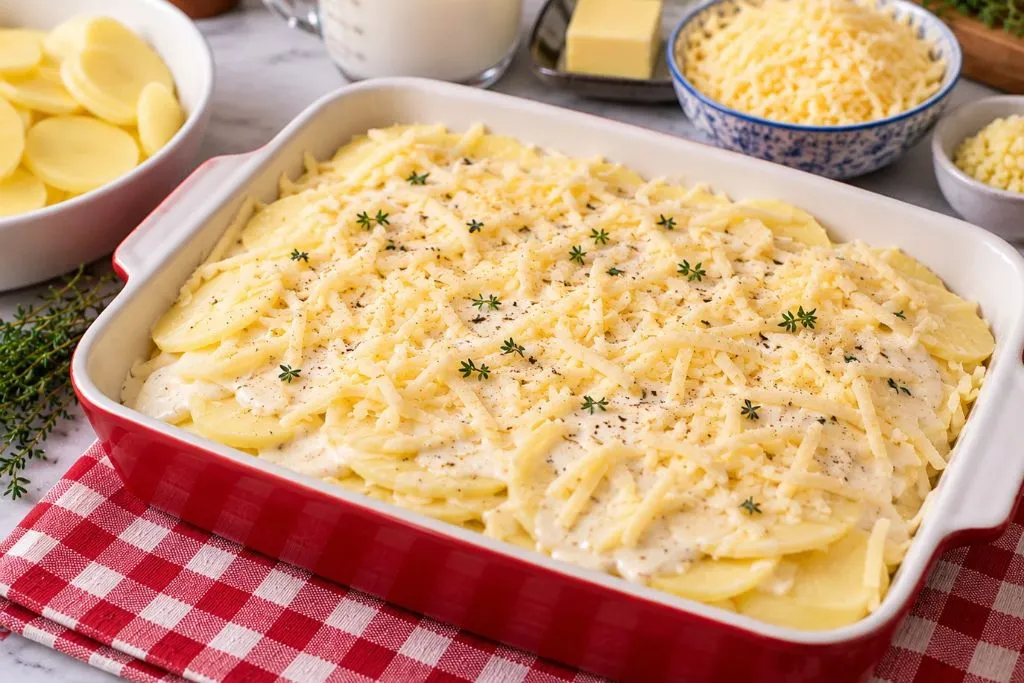
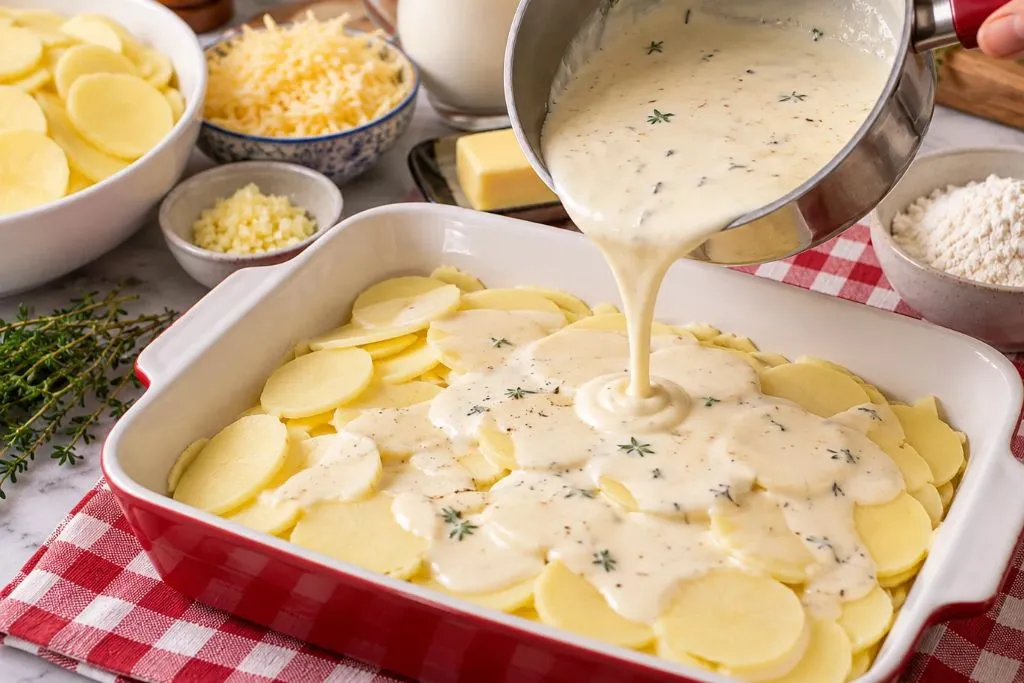
Making homemade scalloped potatoes from scratch comes down to three things: a roux based cream sauce, potato slices cut to an even thickness, and a slow enough bake that the potatoes turn fully tender before the top over browns. The sauce comes together on the stovetop in under 10 minutes, then the potatoes are layered with the sauce in a baking dish and finished in the oven, covered at first so they steam through, then uncovered so the top can turn golden. Full ingredient amounts and step by step instructions are in the recipe card below.
Homemade scalloped potatoes recipe
Tips for perfectly creamy scalloped potatoes
Warm the milk and cream slightly before whisking them into the roux. Cold dairy added all at once is more likely to leave lumps in the sauce.
Cover the dish with foil for the first half of baking. This traps steam so the potatoes cook through before the top has a chance to brown too fast.
Let the dish rest for at least 10 minutes after it comes out of the oven. The sauce is still quite thin straight from the oven and thickens noticeably as it cools and sets.
If you do not have a mandoline, a sharp chef’s knife or the slicing disc on a food processor both work, the goal is just even, thin slices.
What to serve with scalloped potatoes
Scalloped potatoes are rich enough to hold their own next to a simple roasted or braised main. My Roast Turkey Breast is one of my favorite pairings around the holidays, and it bakes in a similar oven window so both can come out close together. For a stovetop alternative on a busier weeknight, my Garlic Mashed Potatoes recipe delivers a similar buttery comfort without needing the oven at all.
Make-ahead, storage and reheating
To get ahead, assemble the dish completely, cover and refrigerate for up to a day before baking, then add about 10 to 15 extra minutes to the covered baking time since it will start out cold. Leftovers keep in an airtight container in the fridge for up to 3 to 4 days, in line with general USDA guidance on how long cooked potato dishes stay safe to eat. Reheat individual portions in the microwave, or cover the baking dish with foil and warm it in a 350F oven for about 20 minutes.
Nutrition estimate
These numbers are an estimate only, based on the ingredients as written, not a calculated or verified nutrition label. One serving, about one eighth of the dish, comes out to roughly 280 to 320 calories, most of it from the butter, cream and cheese, with around 7 grams of protein per serving. Leave out the cheese or use all milk instead of part cream to lighten it up.
Frequently asked questions
What is the difference between scalloped potatoes and potatoes au gratin?
Traditionally, scalloped potatoes are made with a roux thickened cream sauce and no cheese, while potatoes au gratin add cheese between the layers and often skip the roux altogether. In practice, a lot of recipes labeled scalloped potatoes today, including this one, add a little cheese anyway, so the line between the two has blurred over the years, especially in American home cooking.
What is the best potato for scalloped potatoes?
Yukon Gold potatoes are the best all-around choice, they hold their shape while still turning creamy and tender. Russet potatoes work well too and add a bit more starch to help thicken the sauce. Waxy potatoes like red or new potatoes hold up structurally but stay firmer, so they are better suited to a different, more rustic style of dish.
Why is my scalloped potato sauce thin or watery?
A thin sauce usually means the roux did not cook long enough before the milk was added, or the potatoes released extra moisture as they baked. Cook the butter and flour together for a full minute before whisking in the milk, and let the finished dish rest for 10 to 15 minutes after baking, the sauce thickens noticeably as it cools.
Can I make scalloped potatoes ahead of time?
Yes. Assemble the whole dish up to a day ahead, cover and refrigerate, then bake it straight from the fridge, adding 10 to 15 extra minutes to the covered baking time. This makes it a convenient make-ahead side for Thanksgiving or other big meals when oven space is tight.
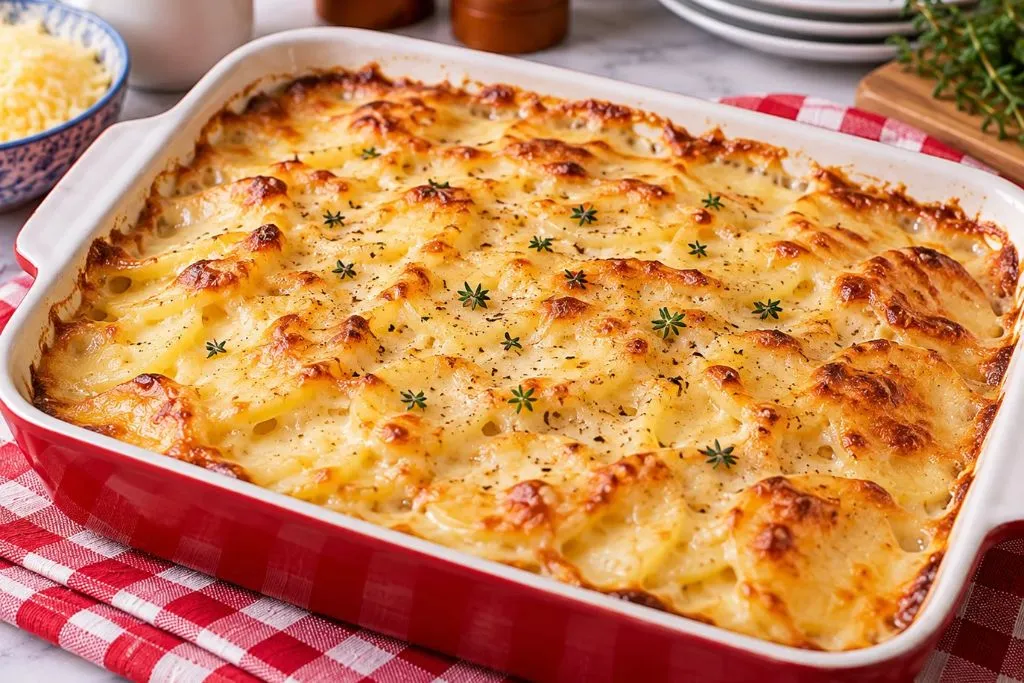
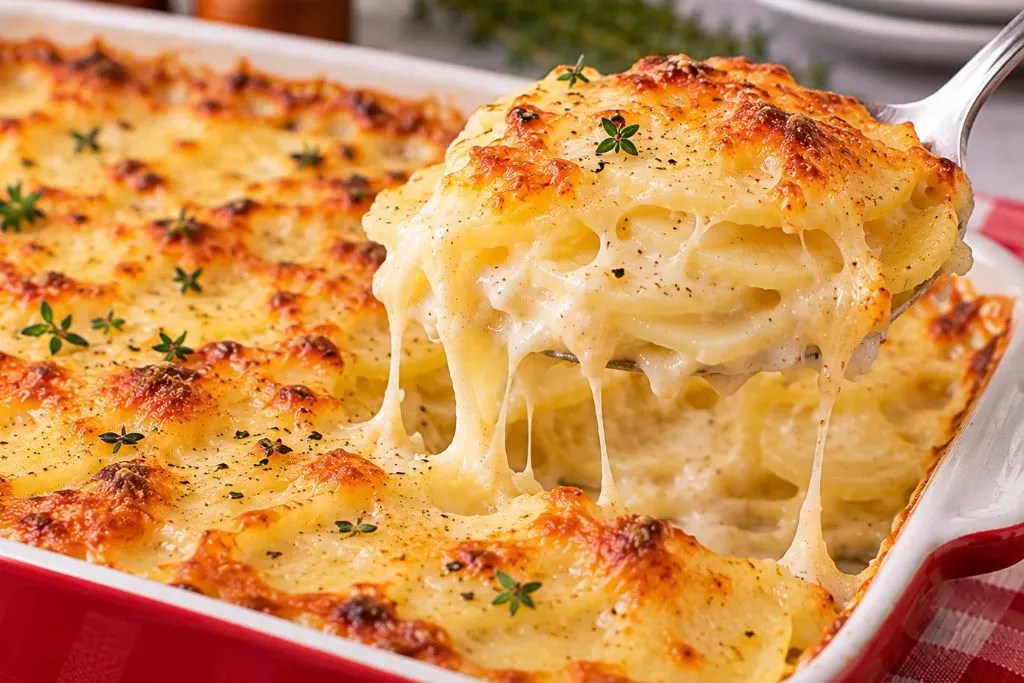
This homemade scalloped potatoes recipe layers thin potato slices in a creamy, from scratch sauce and bakes until the top turns golden and bubbling at the edges. No canned soup and no shortcuts, just butter, flour, milk and a little cheese stirred together on the stovetop first. It has become my go to scalloped potatoes recipe anytime I want a comforting side that still feels a little special, especially around the holidays.
Why this scalloped potatoes recipe works
The first time I made this, I sliced the potatoes by hand with a chef’s knife and ended up with pieces ranging from paper thin to nearly a quarter inch thick. The thick pieces were still a little firm in the center after an hour in the oven, while the thin ones had gone soft and started to fall apart. Since then I always reach for a mandoline, or the slicing disc on a food processor, to get every slice close to the same 1/8 inch thickness, which turned out to be the single biggest factor in whether the whole dish bakes through evenly.
Ingredient notes and substitutions
Potatoes: Yukon Gold potatoes hold their shape well and add a naturally buttery flavor to the finished dish. Russet potatoes work too and turn out a bit starchier, which helps thicken the sauce slightly as it bakes.
Milk and cream: whole milk keeps the sauce pourable while a small amount of heavy cream adds richness. Using all milk works fine too, the sauce will just be a touch thinner.
Butter and flour: cooked together into a roux, they thicken the sauce enough to coat the potatoes instead of leaving them sitting in a thin liquid at the bottom of the dish.
Garlic and thyme: cooked briefly in the butter before the flour goes in, so their flavor spreads through the whole sauce instead of staying concentrated in a few bites.
Cheese (optional): traditional scalloped potatoes are made without cheese, that is actually the main thing that separates them from potatoes au gratin (more on that in the FAQ below). This recipe includes a light layer of shredded Gruyere or sharp cheddar because most American versions, including the one I grew up eating, add a little. Leave it out entirely for a more classic, dairy forward version.
How to make homemade scalloped potatoes
Making homemade scalloped potatoes from scratch comes down to three things: a roux based cream sauce, potato slices cut to an even thickness, and a slow enough bake that the potatoes turn fully tender before the top over browns. The sauce comes together on the stovetop in under 10 minutes, then the potatoes are layered with the sauce in a baking dish and finished in the oven, covered at first so they steam through, then uncovered so the top can turn golden. Full ingredient amounts and step by step instructions are in the recipe card below.
Homemade scalloped potatoes recipe
Tips for perfectly creamy scalloped potatoes
Warm the milk and cream slightly before whisking them into the roux. Cold dairy added all at once is more likely to leave lumps in the sauce.
Cover the dish with foil for the first half of baking. This traps steam so the potatoes cook through before the top has a chance to brown too fast.
Let the dish rest for at least 10 minutes after it comes out of the oven. The sauce is still quite thin straight from the oven and thickens noticeably as it cools and sets.
If you do not have a mandoline, a sharp chef’s knife or the slicing disc on a food processor both work, the goal is just even, thin slices.
What to serve with scalloped potatoes
Scalloped potatoes are rich enough to hold their own next to a simple roasted or braised main. My Roast Turkey Breast is one of my favorite pairings around the holidays, and it bakes in a similar oven window so both can come out close together. For a stovetop alternative on a busier weeknight, my Garlic Mashed Potatoes recipe delivers a similar buttery comfort without needing the oven at all.
Make-ahead, storage and reheating
To get ahead, assemble the dish completely, cover and refrigerate for up to a day before baking, then add about 10 to 15 extra minutes to the covered baking time since it will start out cold. Leftovers keep in an airtight container in the fridge for up to 3 to 4 days, in line with general USDA guidance on how long cooked potato dishes stay safe to eat. Reheat individual portions in the microwave, or cover the baking dish with foil and warm it in a 350F oven for about 20 minutes.
Nutrition estimate
These numbers are an estimate only, based on the ingredients as written, not a calculated or verified nutrition label. One serving, about one eighth of the dish, comes out to roughly 280 to 320 calories, most of it from the butter, cream and cheese, with around 7 grams of protein per serving. Leave out the cheese or use all milk instead of part cream to lighten it up.
Frequently asked questions
What is the difference between scalloped potatoes and potatoes au gratin?
Traditionally, scalloped potatoes are made with a roux thickened cream sauce and no cheese, while potatoes au gratin add cheese between the layers and often skip the roux altogether. In practice, a lot of recipes labeled scalloped potatoes today, including this one, add a little cheese anyway, so the line between the two has blurred over the years, especially in American home cooking.
What is the best potato for scalloped potatoes?
Yukon Gold potatoes are the best all-around choice, they hold their shape while still turning creamy and tender. Russet potatoes work well too and add a bit more starch to help thicken the sauce. Waxy potatoes like red or new potatoes hold up structurally but stay firmer, so they are better suited to a different, more rustic style of dish.
Why is my scalloped potato sauce thin or watery?
A thin sauce usually means the roux did not cook long enough before the milk was added, or the potatoes released extra moisture as they baked. Cook the butter and flour together for a full minute before whisking in the milk, and let the finished dish rest for 10 to 15 minutes after baking, the sauce thickens noticeably as it cools.
Can I make scalloped potatoes ahead of time?
Yes. Assemble the whole dish up to a day ahead, cover and refrigerate, then bake it straight from the fridge, adding 10 to 15 extra minutes to the covered baking time. This makes it a convenient make-ahead side for Thanksgiving or other big meals when oven space is tight.