
The Best Fluffy Pancakes recipe you will fall in love with. Full of tips and tricks to help you make the best pancakes.

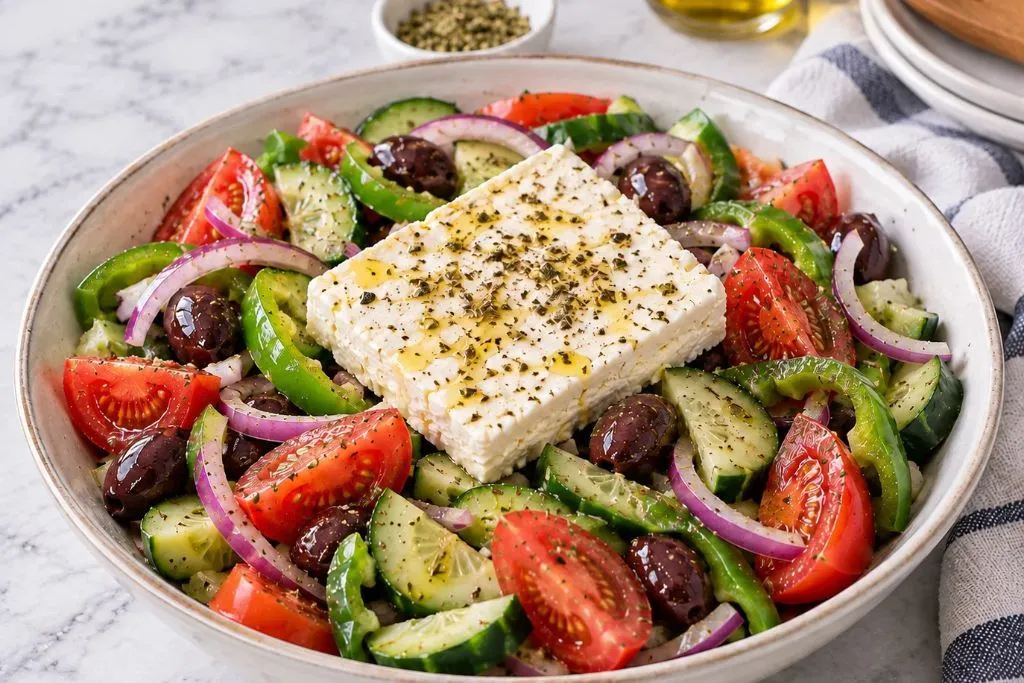
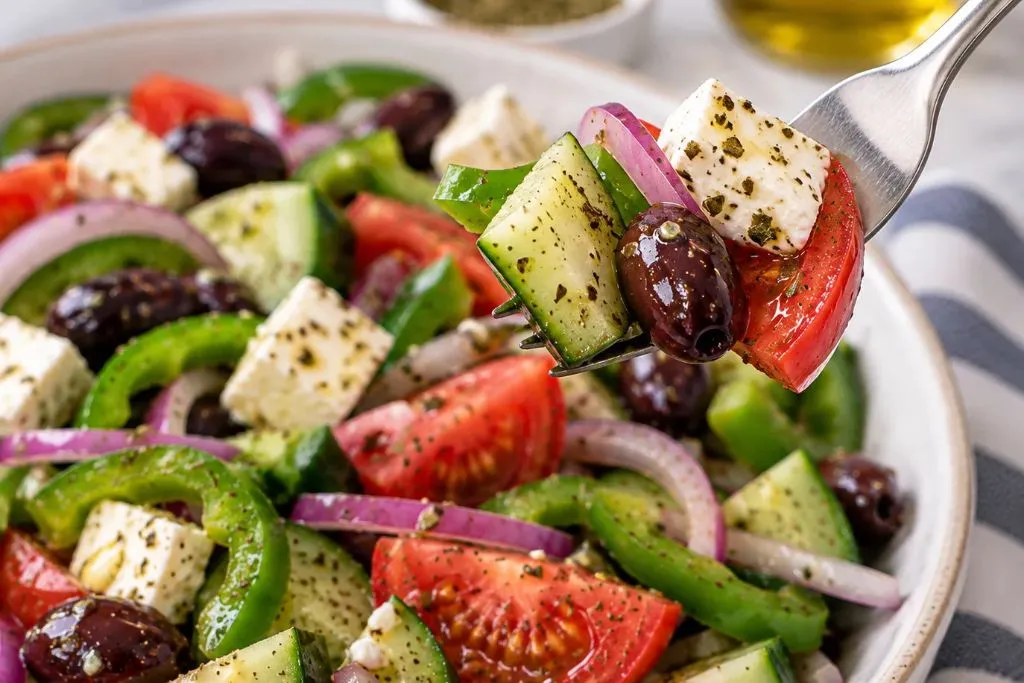
This Greek salad is the one I make when the tomatoes are actually good, since there is nowhere for a mediocre tomato to hide here. Juicy tomatoes, cucumber, green pepper, red onion and Kalamata olives get tossed with olive oil and red wine vinegar, then topped with a full block of feta. No lettuce, no cooking, ready in about 15 minutes. If you want another composed salad along these lines, our cobb salad follows the same idea with different ingredients.
Table of Contents
Why this Greek salad works
Every vegetable here is served raw and in big pieces, so the salad depends entirely on using ripe, in-season tomatoes and a good olive oil. There is no dressing trick that fixes a bland tomato.
Kalamata olives and a full block of feta bring enough salt and tang that the dressing itself only needs three ingredients: olive oil, red wine vinegar and dried oregano.
It comes together in about 15 minutes with no cooking at all, which makes it one of the fastest sides on the site to put on the table.
Ingredient notes and substitutions
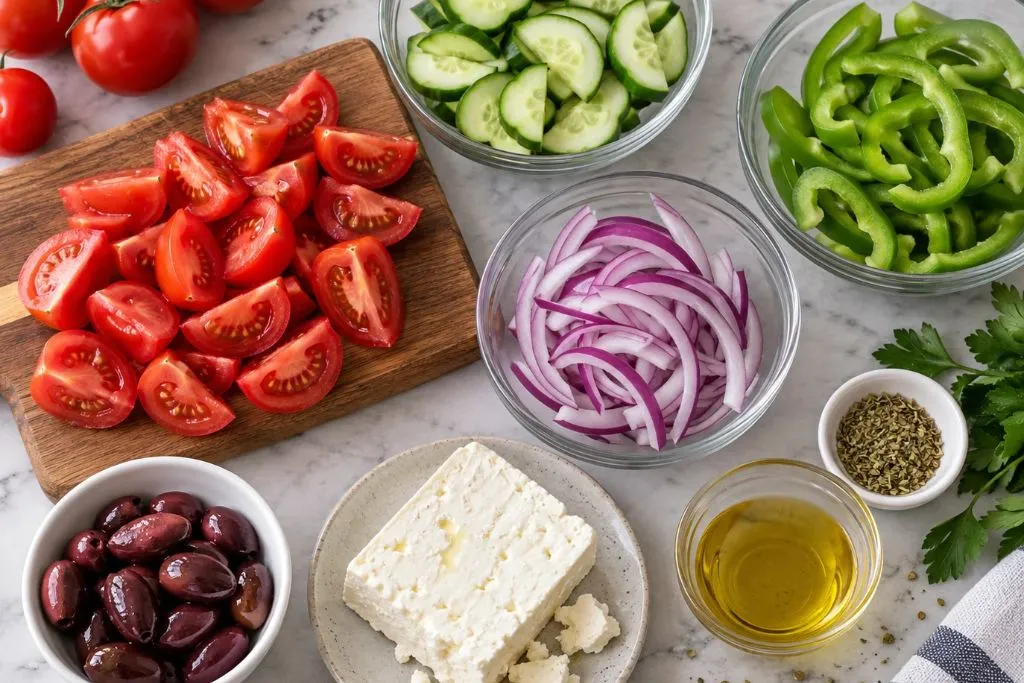
Tomatoes: use the ripest tomatoes you can find, cut into wedges. This salad is not the place for winter tomatoes out of a plastic clamshell.
Cucumber: English (hothouse) cucumber works best since it has fewer seeds and a thinner skin, so you do not need to peel it.
Green bell pepper: traditional in a Greek salad, sliced into rings or half-rings. Leave it out if you are not a fan, it will not throw off the balance much.
Kalamata olives: their briny, slightly fruity flavor is part of what makes this a Greek salad rather than a generic chopped salad. Canned black olives are not a good substitute here.
Feta cheese: buy a block packed in brine, not pre-crumbled. Pre-crumbled feta is drier and has less flavor. Traditionally the block sits whole on top of the salad and gets broken apart at the table. Worth knowing when you shop: under EU rules only cheese produced in Greece from ewe’s and goat’s milk can be sold as feta, which is why cow’s milk versions made elsewhere go by another name.
Red wine vinegar: this is the classic choice, though a squeeze of lemon juice works too if that is what you have.
Does authentic Greek salad have lettuce?
No. A traditional Greek salad, called horiatiki, is built from tomatoes, cucumber, green pepper, red onion, olives and feta, with no lettuce at all. Lettuce-based versions are a common American adaptation, not the original.
Skipping the lettuce is actually part of why this salad holds up so well: there is no leafy base to wilt, so leftovers stay appetizing far longer than a typical green salad.
If you do want to stretch it into more of a main course salad, serving it over a bed of romaine is a reasonable way to do that, it just is not the traditional version.
Classic Greek salad recipe
Greek Salad with Feta and Olives
Servings
6
servingsPrep time
15
minutesTotal time
15
minutesA classic Greek salad recipe with tomatoes, cucumber, green pepper, red onion and Kalamata olives, tossed in an olive oil and red wine vinegar dressing and topped with a block of feta. Ready in about 15 minutes, no cooking required.
Ingredients
4 large ripe tomatoes, cut into wedges
1 English cucumber, sliced into half-moons
1 green bell pepper, sliced into rings
1/2 red onion, thinly sliced
1 cup Kalamata olives
6 to 8 ounces feta cheese, in a block
1/4 cup extra virgin olive oil
2 tablespoons red wine vinegar
1 teaspoon dried oregano
Salt and black pepper, to taste
Directions
- Prep the vegetables: cut the tomatoes into wedges, slice the cucumber into half-moons, slice the green pepper into rings, and thinly slice the red onion.
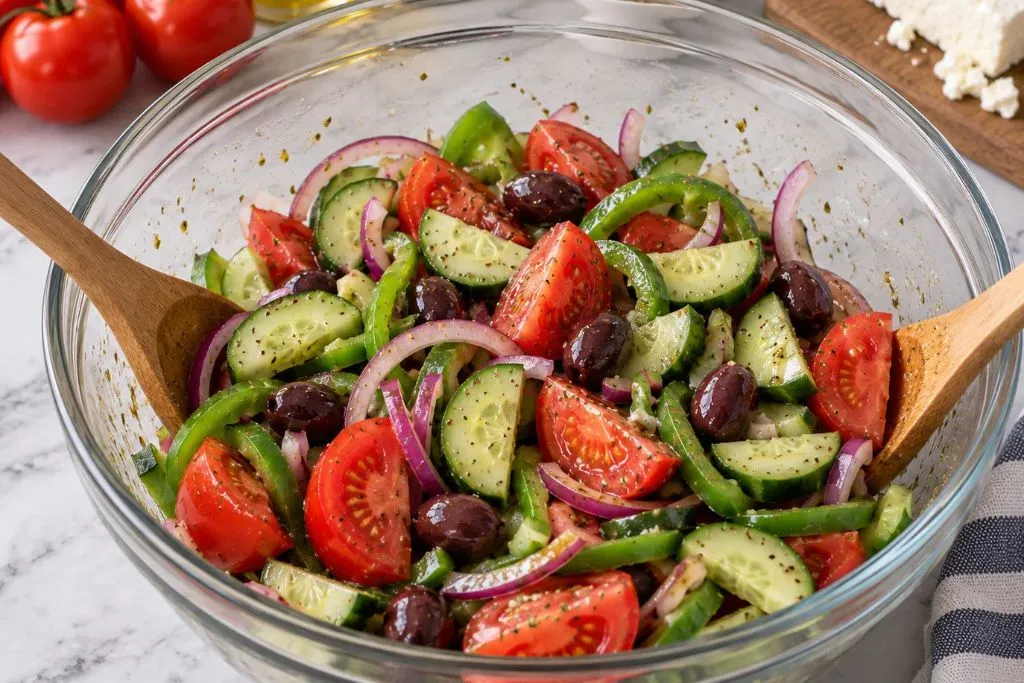
- Combine: in a large bowl, toss the tomatoes, cucumber, green pepper, red onion and olives together.
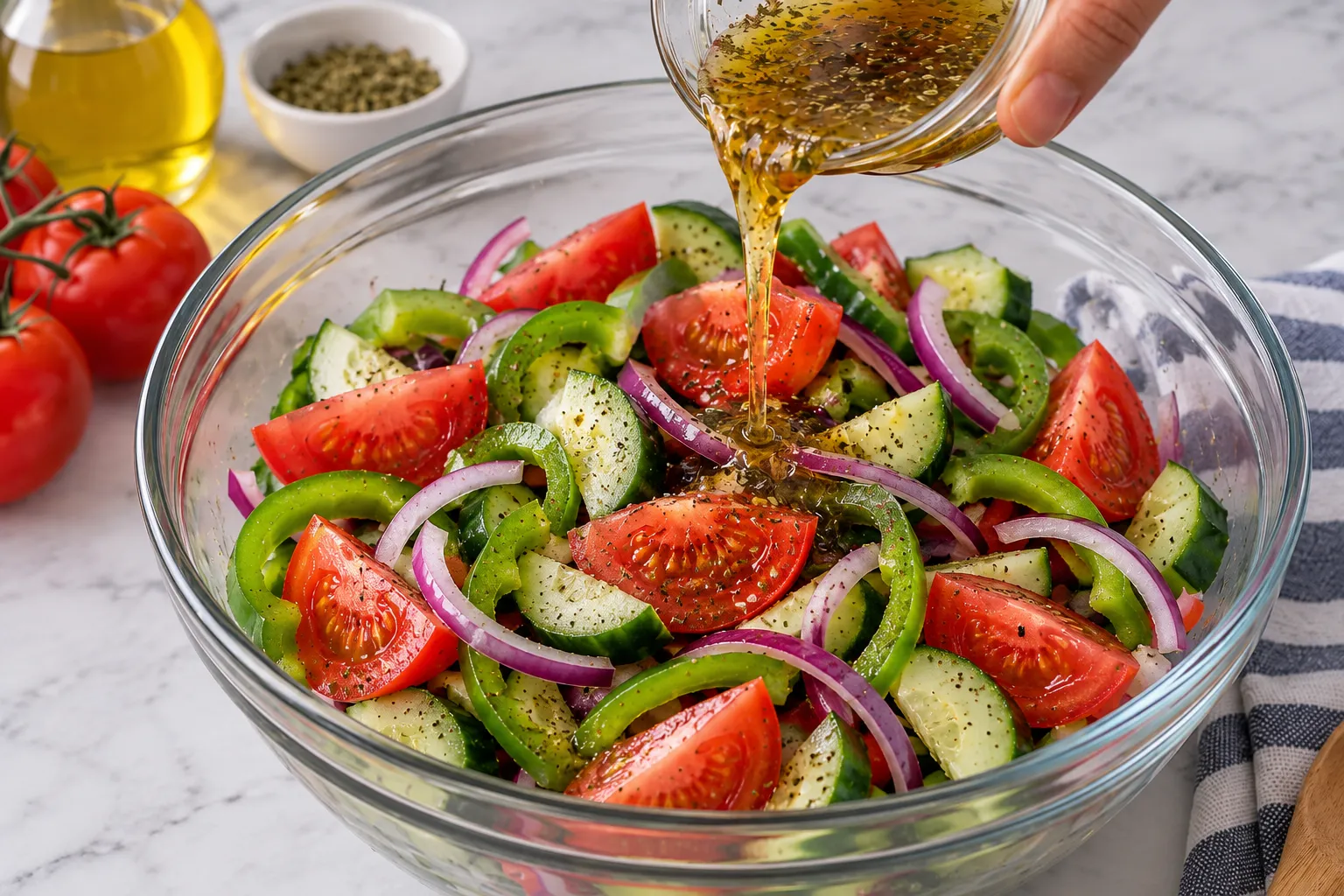
- Make the dressing: in a small bowl, whisk together the olive oil, red wine vinegar, oregano, salt and pepper.
- Dress the salad: pour the dressing over the vegetables and toss gently to coat, then let it sit for about 10 minutes.
- Top and serve: place the block of feta on top of the salad, drizzle with a little extra olive oil and a pinch of oregano, and serve.
Notes
- Servings and timing are estimates based on the ingredients in this recipe, adjust to taste and to your own tested version. Use the ripest tomatoes you can find for the best flavor.
Tips for the best Greek salad
Salt the tomatoes and cucumber lightly and let them sit in a colander for a few minutes before assembling, then pat them dry. This keeps the finished salad from turning watery.
The first time I made this I crumbled the feta straight into the bowl and tossed everything together, and the cheese basically disappeared into the dressing. Now I always leave the block whole on top and let people break off their own piece.
Let the tossed vegetables sit for about 10 minutes before serving so the dressing has time to soften the onion slightly and pull flavor out of the tomatoes.
Add the feta and any extra olive oil right before serving, not while the vegetables are still marinating, so it stays intact instead of getting soggy.
Ways to vary this Greek salad
Greek salad bowl: add cooked orzo or chickpeas to turn this into a filling lunch bowl on its own.
With lettuce: serve the vegetables over chopped romaine if you want a bigger, more American-style version.
Extra herbs: a handful of fresh dill or mint on top adds a brighter, more herbal note than oregano alone.
Protein boost: top with grilled chicken or shrimp to turn it into a main dish.
What to serve with Greek salad
This salad is a natural side for anything grilled, especially grilled chicken, lamb or fish, since the acidity cuts through richer, smokier flavors.
For a full Mediterranean-style spread, pair it with warm pita and hummus alongside a main like our chicken cutlet recipe.
It also works well as a light lunch on its own with a piece of crusty bread to soak up the dressing left in the bowl. If you are drawn to no-cook salads built on ripe tomatoes, our caprese salad works on the same principle, with mozzarella and basil in place of feta and olives.
Storage and make-ahead
Store leftovers in an airtight container in the refrigerator for up to 2 days. Because there is no lettuce, it holds up better than most salads, though the vegetables do release some liquid over time.
To prep ahead, chop the vegetables and make the dressing up to a day in advance and store them separately, then toss everything together with the feta and olives right before serving.
Nutrition estimate
These numbers are an estimate only, based on the ingredients in this recipe, not lab tested or calculated automatically. Actual values will vary depending on the exact brands and quantities you use. Per serving (based on 6 servings): approximately 180 to 210 calories, 5 to 7g protein, 8 to 10g carbohydrates, 15 to 18g fat, and 480 to 540mg sodium.




[…] no cooking, ready in about 10 minutes. If you want another no-cook salad built the same way, our Greek salad follows the same idea with different […]